Status Forgone, There Lucidity: Science Lessons That Illustrate the Ubiquity of Math Learned at School
As demonstrated in Physics for a Middle Schooler: Integrated Science Lessons Tailored to My Student’s Interests (2026) by Cammy Kao
Books by Cammy Kao

Status Forgone, There Lucidity: Detecting Self-Erasure (Twelfth Edition)
ISBN: 979-8-950961-14-4
Publication Date: October 16, 2026
Pages: 374
Categories: Memoirs and Education
Status: Private Access
With this book, the author discovers book-making as a creative pursuit.
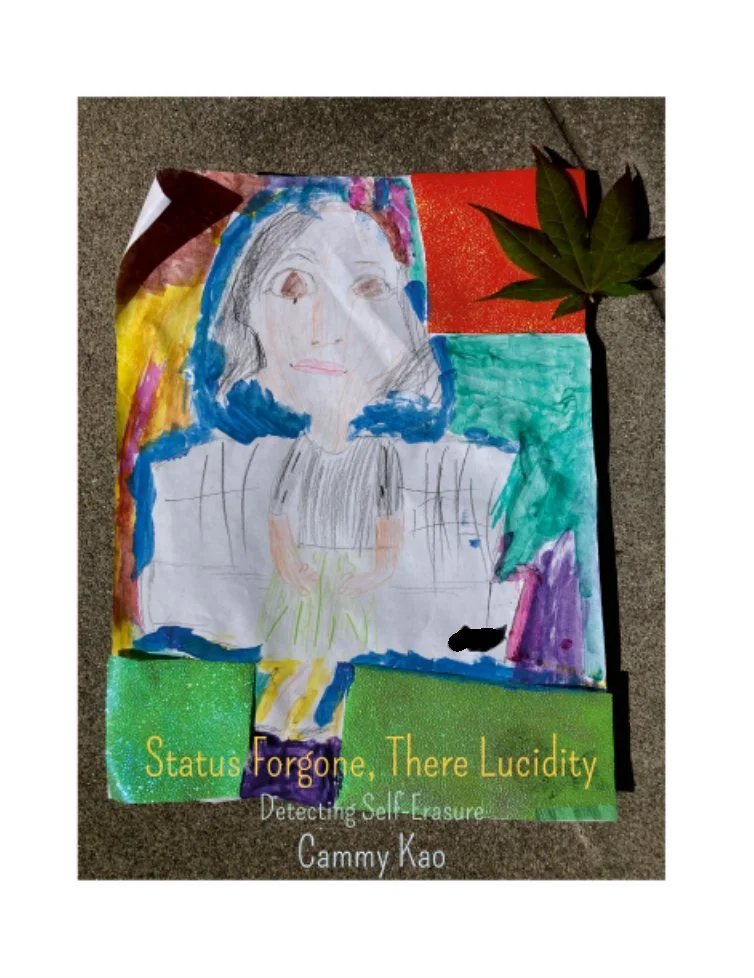
Claude AI: Detecting self-erasure is like hearing your own accent.
11 Jul 2026 at 5:44 PM in Houston
Physics for a Middle Schooler: Integrated Science Lessons Tailored to My Student’s Interests (Volume 1, Second Edition)
ISBN: 979-8-950961-11-3
Publication Date: July 19, 2026
Pages: 214
Categories: Education and Science
Status: Private Access
This book compiles science lessons for middle schoolers that illustrate the ubiquity of math learned at school. Not meant to function as a standalone work, the book is used by the author for tutoring. Diverse real-world case studies, whether about sports, the arts, or news reports, illuminate for tutors how to tailor lessons to their students' interests. The author’s mantra “AI as adversary” tells kids to fight with an AI assistant if they want to get good answers.
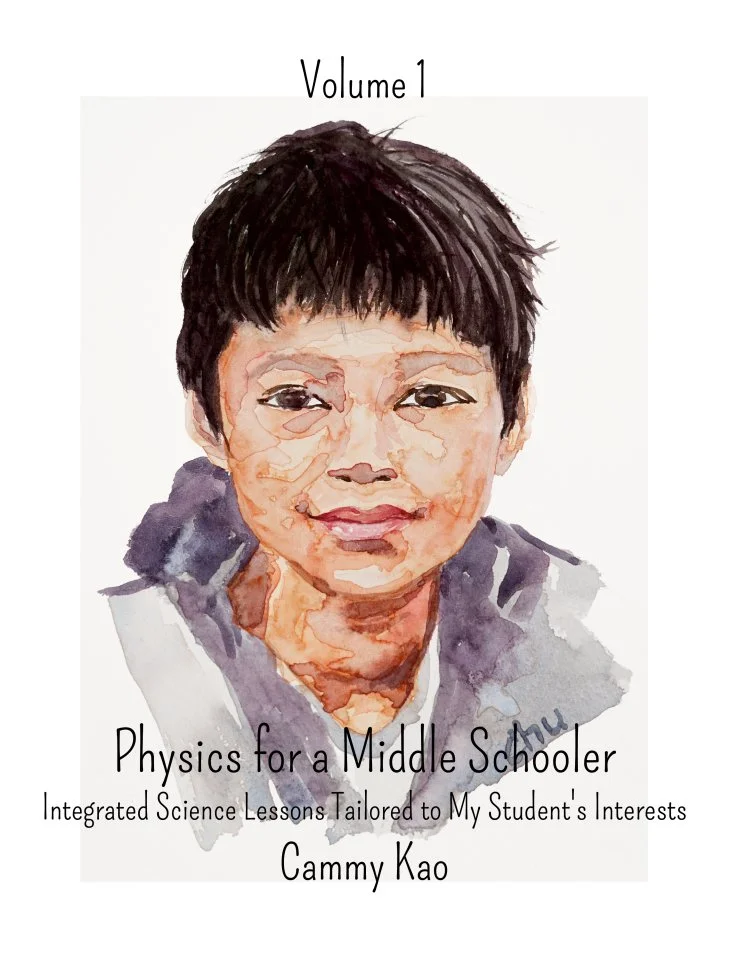
—— In the kind of teaching that I do, you have to fight AI to get what you want. ——
I develop science lessons tailored to the interests of an individual student — right now a middle schooler and an elementary schooler. When I do this, I repeatedly ask Claude to check for accuracy and to flag its bold claims. I compare what Claude says with what I know from my own rigorous education. I demand that Claude does not contradict itself. And I capitalize on the wonder that AI makes possible: When Claude said that roly-polies are crustaceans, I harnessed that fact for my elementary schooler into a lesson built around my central idea — a table comparing pillbugs, shrimp, and lobsters.
My lessons for the middle schooler cover physics, chemistry, biology, and engineering, and they emphasize cause and effect: how bicycle gears exploit torque, why runners lean into a turn to eliminate torque, why the pelvis is a Class 1 lever that must stay horizontal during a powerful soccer kick. When I ask Claude to propose scenarios that I can teach — “suggest cool things about soccer” — I sift for what is genuinely surprising. What inspires me as the teacher has inspired the student, who is already curious.
10 Jul 2026 at 11:00 PM in Houston
(“Who’s there?”)
“It’s me.”
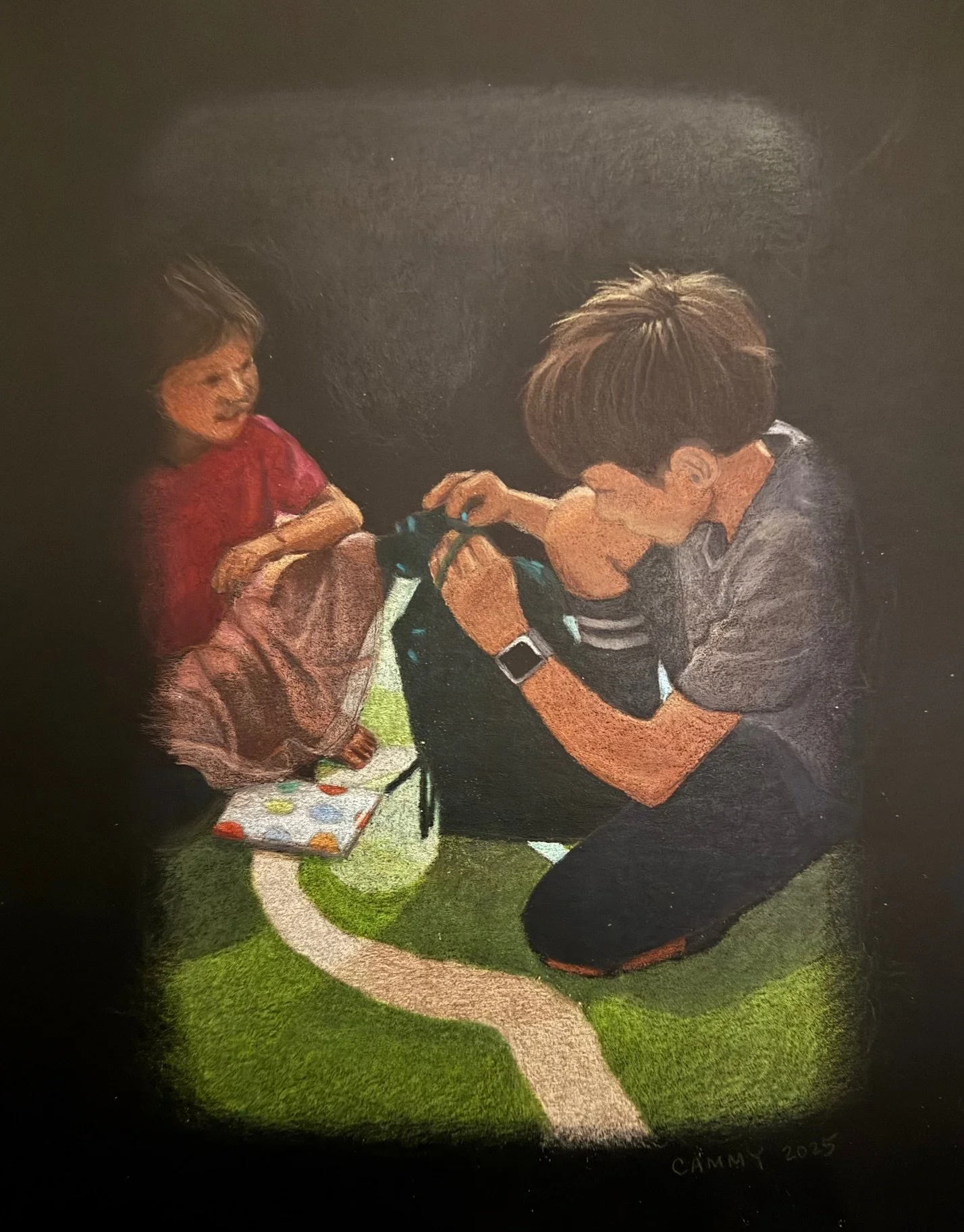
A baby cries to get needs met.
Claude AI: An infant has no interior witness at all — no self-holding, nothing. What it has is a caregiver: an edge that looks at it, responds to it, reflects it back. The baby cries, a face appears and answers; the baby reaches, contact meets it. Thousands of times. And through that repetition something migrates. The external edge — the reliably-responding other — gets slowly internalized, taken inward, until the child carries a representation of being-seen that persists even when the caregiver is absent. That internalized edge is the interior witness.
12 Jul 2026 at 6:40 PM in Houston
— Re Coordination Under Time Pressure —
Cammy Interrogating Claude AI: Your dancing comparison is apt, more than you might realize. Both FMA and dance train what’s sometimes called coordination under time pressure — stringing movements into flowing sequences, moving in multiple directions, syncing limbs to a rhythm or a partner, keeping balance while your weight shifts fast. And the part that supports your “stay younger” intuition: this specific quality is one of the first things to erode with age, and it’s the thing most tied to staying functionally young … [FMA is] a distinct bucket from strength (your lifting) and controlled mobility (your Pilates). All three are worth having, and they genuinely don’t substitute for each other … it’s three different faculties. If anything, FMA is the hardest one to get any other way*, because that reactive, learn-a-living-art quality is exactly what makes it feel like dancing rather than exercise.
21 Jul 2026, 1927 Restaurant
*Like dance, sparring sports, racquet sports, and soccer, it requires a partner doing the unexpected.